
A clean workplace affects the way that employees and customers are treated by a business. It also enhances cleanliness, comfort, and the long-term health of furniture, floors, and other fixtures. But professional cleaning must be more than emptying trash bins and cleaning the open spaces.
A comprehensive checklist for office cleaning provides a detailed explanation of what needs to be cleaned, when it is scheduled, and the standards that the company must adhere to. It stops important jobs from getting lost in vague statements like “general cleaning” and gives Facilities managers a method to evaluate the quality of their services.
1. Reception and Shared Areas

The reception area is the first thing that visitors will se; therefore, it must be kept clean all through the week. Cleaners must clean furniture, wipe counters and glass surfaces, clean up marks on the glass, clean carpets, sweep hard floors, and clean door handles. The waiting area seating needs to be looked after in the area of legs, beneath cushions, and along walls where debris accumulates.
Corridors, lift buttons, light switches, stair rails, as well as internal doors are repeatedly touched. A comprehensive checklist for office cleaning will reveal these specifics instead of focusing on areas shared by multiple people, such as simple bins and floors.
2. Desks, Workstations, and Private Offices
Workstations accumulate dust and paper pieces, as well as crumbs and even fingerprints. Professional cleaners should wash all surfaces that are accessible to desks, clean phones, dust monitors and chairs, as well as clean the arms of the chair and empty trash containers, not causing damage to personal documents or objects. Screen and keyboard care can be included if they are agreed on prior to time and accompanied by appropriate products.
Desk legs and partitions, cable areas, and corners must be listed on the office’s janitorial checklist since they are often overlooked. Cleaners should also adhere to confidentiality. Closed drawers, documents and electronic equipment should not be moved in any way that is unnecessary.
3. Kitchens and Break Rooms
Kitchens in offices require more rigorous hygiene control than regular workspaces. Worktops, sinks and handles on cupboards, taps, tables, the exteriors of appliances and splashbacks need to be disinfected and cleaned. Microwaves require internal wiping, and refrigerators must be inspected for spills, and bins need to be cleared prior to the onset of odors.
Flooring needs to be watched closely in areas around the sinks and drink stations. Cleaning sticky floors requires appropriate detergent, freshly sprayed mop water, and sufficient time to allow for the breakdown of the residue. A daily office cleaning checklist must also include fronts of cupboards and interiors of appliances along with skirting boards and corners that are difficult to reach.
4. Washrooms and Restocking
Bathrooms show the real qualities of a professional cleaning company. Basins, toilets, urinals and taps, mirrors, dispensers, doors to cubicles, and floors must be maintained using products that are matched to the surface. Points that touch the most require disinfection and toilet tissue, soap, and paper towels, as well as sanitation supplies, which require regular inspections and replenishment.
Odor control should be based on getting rid of the cause and not covering it up by putting on a scent. Cleaners should wash fixture bases and empty bins, clean the contact points, and signal leaks, blocked dispensers, broken fittings, and persistent odors. These items should be on every checklist for office cleaning.
5. Floors, Carpets, and Hard Surfaces
Different flooring materials require different methods. Carpets need to be cleaned thoroughly at all times, including around edges, underneath furniture, and in heavy-traffic lanes. Spots must be dealt with quickly before they turn into permanent stains, and periodic extraction might be required in busy workplaces.
Hard floors must be cleaned or vacuumed prior to mopping. The floor must be suitable for tiles, vinyl, stone laminate, or sealed wood. Scrubbing, polishing, and other treatments for protection are to be scheduled according to the need. These tasks belong to the weekly office cleaning checklist or the monthly schedule, not the unclear “deep clean.”
6. High-Touch Points and Shared Equipment
Access keypads, door handles, control of printers, shared phone, handrails, meeting room remotes, and more are all likely to collect contaminants all day long. They must be cleaned with the right disinfectant and proper contact time.
Professionally trained office cleaning services look at how the people move around the building. A helpful checklist for office cleaning is one that reflects the patterns of occupancy, shifts in visitor numbers, shift patterns, and equipment shared, instead of implementing the same procedure to each place.
7. Meeting Rooms and Periodic Tasks
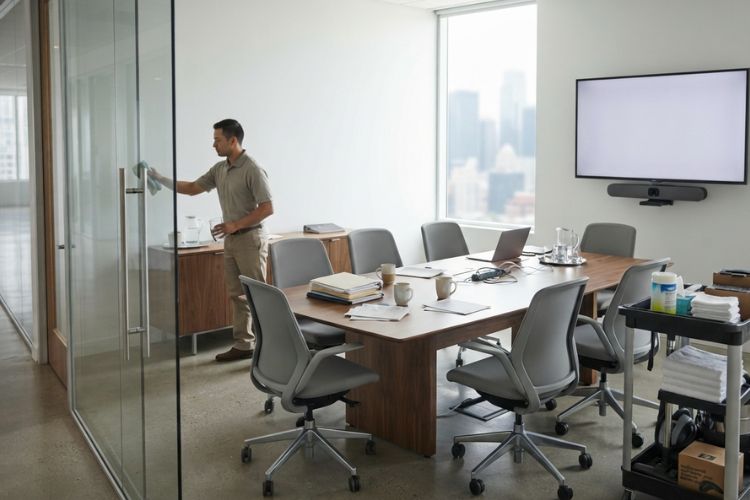
Meeting rooms should be set to be used without having to do any last-minute cleaning. Tables should be cleaned, chairs must be arranged with bins empty and presentation equipment cleaned, and floors cleaned or mopped. Whiteboards and glass boards must only be cleaned after a specific time period.
Everyday work creates immediate messes, but regular cleaning stops the incline. Dusting at a high level, vent cleaning, interior glass cleaning and carpet extraction, upholstery treatment, polishing floors, and cleaning behind furniture moving must be specified in terms of frequency. The office janitorial checklist must identify which tasks are performed each week, monthly, or even quarterly.
How to Assess the Service
A thorough office cleaning checklist outlines the purpose, the location, frequency, process, and person accountable. The checklist should also allow supervisors space to note inspections, shortages in supplies or items that are not used, as well as corrective actions. The document must be reviewed each time the staffing levels, hours of operation or layouts change, or if hygiene standards change.
Before signing a contract, get a sample schedule to clarify how complaints, spills, as well as access restrictions and replacement of supplies will be dealt with.
Clear standards safeguard both the business and the cleaning service. They allow for better performance to discuss, lessen confusion, and ensure that the most important areas get proper attention at the proper moment.
FAQs
What should a cleaning checklist contain?
It should include kitchens, washrooms, workstations, reception areas, meeting rooms, flooring, bins, high-touch areas, supplies, and regular deep-cleaning tasks. Each job should have an established frequency and quality standard.
How often should offices have professional cleaning?
The frequency of visits depends on the number of employees, visitors, staff numbers, hours of operation, and kind. Workplaces with a lot of traffic may require regular visits; smaller ones may require regular cleaning along with a schedule of weekly activities.
Who is responsible for inspecting the completed work?
A facility manager, supervisor for the site, or an employee appointed by the company should look over the results. The cleaning company must also conduct its own quality inspections and record any issues that require monitoring.
Why is a written checklist crucial?
A written checklist can help avoid missing obligations, clarify expectations, and allow businesses to compare promises of work with actual outcomes. This also makes future changes simpler as the needs of the workplace shift.