
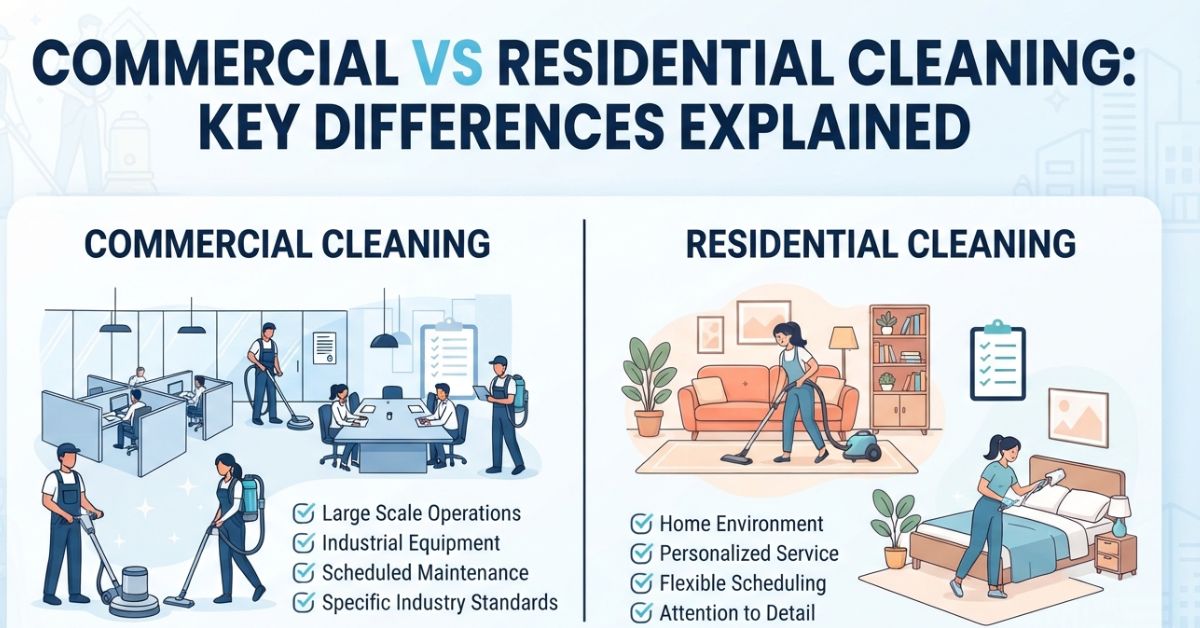
Clean homes and clean offices may appear simila;r however, each one requires an entirely different approach. The size, the number of people walking through the door, frequency of equipment, and the expected results determine the quality of service.
Understanding the difference between residential and commercial cleaning can help homeowners and managers select the most appropriate team. It will prevent booking house cleaning services for a working environment and paying commercial services for a home that only requires regular maintenance.
What Is Residential Cleaning?
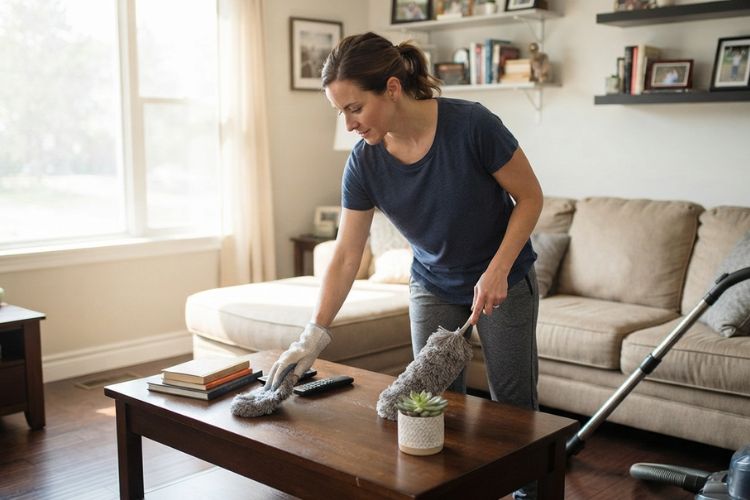
Cleaning for residential properties focuses on homes, townhomes, apartments, as well as rental properties. The goal is to make your home more comfortable and less difficult to maintain.
A typical visit might include cleaning, dusting kitchen surfaces, cleaning carpets, vacuuming them, cleaning flooring, emptying garbage bins, and tidying up common rooms. Customers can schedule weekly, biweekly, or monthly deep cleaning, or a one-time service.
Personal preferences are important. A housekeeper may need to adhere to specific guidelines regarding delicate decor, pet-friendly areas, products that are fragrance-free, or even private rooms. This is the reason hiring a house cleaner requires more than just comparison of rates. Trust and communication, as well as consistency and attentiveness, are important too.
What Is Commercial Cleaning?
Commercial cleaning is intended for public and workplace buildings. Clinics, offices, shops, warehouses, school,s and shared structures are more frequently visited than houses, which is why they require a strategy.
The tasks could include cleaning shared surfaces, cleaning workstations, maintaining restrooms, cleaning up larger amounts of trash, making floors shine,cleaningn entrances, and replenishing hygiene equipment. The workers must adhere to working conditions for access to the workplace.
Professional office cleaning services typically are completed prior to opening, after closing, or at times when there is less noise. This reduces disruption and keeps the workplace clean.
Commercial vs Residential Cleaning: Five Key Differences
The most effective way to evaluate commercial and residential cleaning is to look at the way each space is utilized. Home environments are private and have individualized requests. Commercial sites are operational settings where uniformity, scale, time, and risk management are more important.
1. Property Size and Cleaning Volume
The majority of homes have predictable spaces that are arranged in predictable areas, such as bathrooms, bedrooms, kitchen, and living space. They typically have fewer people and generate less waste than workplaces that are active.
A commercial property could comprise open offices and meeting rooms, reception areas, break rooms, several restrooms, stairways, storage areas, and even public entrances. The staff must cover a greater space within a set window.
2. Equipment and Products
The majority of residential cleaners use handheld vacuum cleaners and microfiber towels, brushes, mops, and household-safe items. The equipment they use must be safe with children, furniture, pets, as well as delicate surfaces.
Commercial teams may employ floor buffers, high-capacity vacuums, carpet extractors, cleaners carts, concentrated disinfectants, and more powerful degreasers. The best tools will depend on the flooring, traffi,c as well as the size of the building and the sanitation requirements.
This is the primary difference in the house cleaning vs office cleaning comparison. The method that is effective in a bedroom could be slow enough for a corridor that is large while heavy machinery might not be needed for an office.
3. Scheduling and Frequency
Scheduled appointments for residential visits are set according to the routine of the homeowner. Biweekly and weekly visits are typical; however, clients may also ask for special, seasonal, or moving-related cleaning.
Commercial cleaning is governed by a stricter schedule. The workplace might require service at night or at times throughout the week, or even during periods of reduced traffic. The absence of service could affect customers, employees, and daily activities.
Cleaning services for both businesses and homes must not be based on a single plan. Every property requires an action plan that is based on how fast dirt will return and how long the team is able to work without disrupting the flow.
4. Cleaning Standards and Priorities
In a house where the customer is at home, they may be concerned the most about clean bathrooms, clean kitchens, furniture that is dust-free, and quiet spaces. The smallest details in finishing can greatly affect satisfaction.
In the workplace, the most important things to consider are high-touch sanitation, bathroom readiness and cleanliness of the entrances, safe floors and waste management, as well as an attractive appearance. Managers might also need checklists, access regulations, and inspections.
5. Pricing Structure
Residential cleaning is usually priced per hour or visit,depending on the size of the property or the condition. Deep cleaning as well as new house cleaning services generally cost more as they require more time and thorough removal of buildup.
Commercial pricing is typically determined by the square footage, type of building, the frequency of service, materials, labor, and areas that are used frequently. A walkthrough will help you determine the exact scope prior to giving a price.
How to Choose the Right Cleaning Service
Start by determining the outcome you require, not the lowest-priced package. Homeowners may require more privacy and a home that is comfortable. A manager might require a reliable system that will keep the workplace ready for employees as well as visitors.
Find out what’s included, what materials are used, what products are supplied in a quality-controlled manner, and how any special requests are dealt with. A written plan makes commercial and residential cleaning simpler to evaluate when comparing cleaning services for homes and businesses.
Final Takeaway
The differences between commercial and residential cleaning aren’t limited to the nature of the building. Residential cleaning is characterized by the personal touch, comfort, and a careful approach to private items. Commercial service is focused on cleanliness, scal,e and consistency. and operational requirements.
A provider who understands these distinctions leads to more transparent pricing, better results, and a strategy that is suited to the way in which the property is utilized.
Frequently Asked Questions
Are commercial cleaning services more expensive than cleaning for residential customers?
It’s not always the case. Size of the property, frequency of servic,es and complexity of the job impact the cost. The cost of residential services can increase when a house requires a thorough cleaning or special attention.
How often should offices get professionally maintained?
The frequency of service depends on the size of the staff as well as visitor traffic, bathroom facilities, shared surfaces, and working hours. The offices that are busy might require daily visits, while smaller businesses may require several visits every week.
Do residential cleaners have their own cleaning supplies?
Many professionals have their own products and tools. The homeowners should talk about allergie, pets, sensitive materials, scent preferences, as well as products they don’t wish to use.
What should I know prior to making a booking with a cleaning service?
Request a detailed plan, pricing strateg,y schedule, the policy on supplies, the quality process, and cancellation policies. Make sure that the team has previous experience with the type of property you have.